Mirror Therapy comes in many flavours. ;-)
You can use it for a variety of different symptoms, injuries and conditions.
Normally you would use a mirror that is perpendicular to your body.
But for external rotation that just doesn't work very well.
As soon as the arm starts to move too far outwards effectiveness decreases.
This also happens with the rubber hand illusion:
if the hands are more than 60cm apart it is very hard to evoke the illusion.
Somehow the brains processing changes and it doesn't integrate the rubber hand any longer.
So for a lot of problems concerning the shoulder mirror therapy is of limited use.
This video shows you how I use this type of therapy to increase range of motion - especially external rotation.
The patient in this clip had a motorcycle accident a year ago.
After rehabilitation and a follow-up neurological exam there still was no measurable EMG activity in his deltoid and biceps muscles.
He had surgery about 4 weeks ago where they removed scar tissue to free up the nerve to help it regenerate.
When asked to externally rotate the arm his initial reaction was "I don't know what to do", i.e. he had lost even the ability to mentally perform the movement.
This is one of the - let's call it side effects of immobilisation:
it's not that the joint, the muscle can't physically do the movement - but the brain has forgotten how to do it.
This is called learned non-use and is a big problem for example in stroke patients.
So the focus of the first treatment session was to show him what external rotation looks like.
That's why he has to be able to see both shoulders in the mirror.
He moves the unaffected one and can see how it looks.
As an additional visual aid I drew lines on his scapula so that he can better see them moving towards his spine.
In order for him to be able to focus on external rotation the weight of the arm is carried by the sling.
This setup is difficult to use at home - who has all that stuff laying around? - but it works great in the clinic.
Saturday, December 27, 2014

Mirror Therapy for Low Back Pain
Mirror Therapy is a very promising treatment approach for a range of chronic pain problems.
CRPS, Phantom Limb Pain, Brachial Plexus Injuries, Frozen Shoulder and a lot of other conditions can be treated with this simple technique.
It can also be used in neurological rehabilitation - for example in treating foot drop.
Several different groups of researchers have now also started researching it's effects in chronic back pain patients. One of those groups is us. ;-)
We used mirror therapy combined with a sensory discrimination training and movement training protocol: "A brief intervention utilising visual feedback reduces pain and enhances tactile acuity in CLBP patients."J Back Musculoskelet Rehabil. 2014 Nov 11.
Our initial thought was, that we needed to show the patients their unaffected side as you do when you use mirror therapy for the extremities.
That's why we used a webcam and a laptop - that way we could flip the image on the screen. We quickly found out however that that wasn't necessary at all.
Simply being able to see one's own back had a big effect on pain and the ability to move it.
Mirror Therapy in this case is used as a tool so that the patient can quickly learn how to move the back in a natural and fluid way. Not as guarded and stiff as they usually do when that part of the body hurts.
It's a "re-learning motor-control" approach as the first step of a comprehensive rehabilitation regimen. When proper motor control is established, the patient then can start functional exercises, weight training and so on and so forth.
But how are you going to train and strengthen muscles that aren't working properly because they are actively inhibited by the nervous system? Doesn't work.
In the clinic you don't have to use the high tech approach using a laptop. In this video I show you how I do it with my clients using 2 mirrors:
Since we have the space available at our clinic I like to use a mirror wall and a big mirror behind the patient. For home use you can also use 2 smaller mirrors - just set them up in such a way that you are able to see your lower back - ideally the left and the right side.
Since it's a treatment that's aimed at re-learning/re-training motor control you can move the unaffected side to see how it looks and feels. Then try it on the symptomatic side.
A lot of patients describe that when you show them a movement, they have no idea of how to do it themselves. They have lost the ability to mentally process movements that they see or do mental imagery movements themselves. This is normal, and mirror therapy is a great way to remove that "mental blockage" pretty quickly.
You can also touch the back while looking at it in the mirror. The brain doesn't care how it get's feedback from the body - just that there is some feedback to work with. ;-)
However: a combination of vision and touch is a great way to normalise maladaptive changes in the brain.
As you can see in the videos I start of the session with the patient sitting on a swiss ball. The movement I'm going for is a small lateral flexion of the lumbar spine (since that is what the low back does during walking).
The curvature of the ball helps make it easier to see and feel the back moving. After that we try the same thing while standing on an unstable surface.
I also used a pen to draw 2 lines on the back - again to make it easier for the patient to see what it should look like when he moves the spine. The lines have to go up and down just a little.
Have fun giving it a try! Questions and comments are welcome!
CRPS, Phantom Limb Pain, Brachial Plexus Injuries, Frozen Shoulder and a lot of other conditions can be treated with this simple technique.
It can also be used in neurological rehabilitation - for example in treating foot drop.
Several different groups of researchers have now also started researching it's effects in chronic back pain patients. One of those groups is us. ;-)
We used mirror therapy combined with a sensory discrimination training and movement training protocol: "A brief intervention utilising visual feedback reduces pain and enhances tactile acuity in CLBP patients."J Back Musculoskelet Rehabil. 2014 Nov 11.
Our initial thought was, that we needed to show the patients their unaffected side as you do when you use mirror therapy for the extremities.
That's why we used a webcam and a laptop - that way we could flip the image on the screen. We quickly found out however that that wasn't necessary at all.
Simply being able to see one's own back had a big effect on pain and the ability to move it.
Mirror Therapy in this case is used as a tool so that the patient can quickly learn how to move the back in a natural and fluid way. Not as guarded and stiff as they usually do when that part of the body hurts.
It's a "re-learning motor-control" approach as the first step of a comprehensive rehabilitation regimen. When proper motor control is established, the patient then can start functional exercises, weight training and so on and so forth.
But how are you going to train and strengthen muscles that aren't working properly because they are actively inhibited by the nervous system? Doesn't work.
In the clinic you don't have to use the high tech approach using a laptop. In this video I show you how I do it with my clients using 2 mirrors:
Since we have the space available at our clinic I like to use a mirror wall and a big mirror behind the patient. For home use you can also use 2 smaller mirrors - just set them up in such a way that you are able to see your lower back - ideally the left and the right side.
Since it's a treatment that's aimed at re-learning/re-training motor control you can move the unaffected side to see how it looks and feels. Then try it on the symptomatic side.
A lot of patients describe that when you show them a movement, they have no idea of how to do it themselves. They have lost the ability to mentally process movements that they see or do mental imagery movements themselves. This is normal, and mirror therapy is a great way to remove that "mental blockage" pretty quickly.
You can also touch the back while looking at it in the mirror. The brain doesn't care how it get's feedback from the body - just that there is some feedback to work with. ;-)
However: a combination of vision and touch is a great way to normalise maladaptive changes in the brain.
As you can see in the videos I start of the session with the patient sitting on a swiss ball. The movement I'm going for is a small lateral flexion of the lumbar spine (since that is what the low back does during walking).
The curvature of the ball helps make it easier to see and feel the back moving. After that we try the same thing while standing on an unstable surface.
I also used a pen to draw 2 lines on the back - again to make it easier for the patient to see what it should look like when he moves the spine. The lines have to go up and down just a little.
Have fun giving it a try! Questions and comments are welcome!
Thursday, July 8, 2010
Spiegeltherapie für alle - Teil 4
Erweiterung der Spiegeltherapie - Feedbacktherapie
Die klassische Spiegeltherapie wird - wie der Name schon sagt - mit Hilfe eines Spiegels durchgeführt.
Betrachtet man aber das Prinzip hinter dieser Art der Therapie - und löst sich vom Gedanken an den Spiegel - öffnen sich ungeahnte Möglichkeiten, auch andere Arten von chronischen Schmerzen zu behandeln.
Bei Querschnittslähmungen hat man ja keine gesunde Seite mehr die man bewegen kann - also kann ein Spiegel auch nicht funktionieren?!
Dieses Problem - und die Lösung gleich dazu ;-) - habe ich im März 2003 beschrieben - in der Yahoo Gruppe Supertraining, Message 29357.
Zu meiner grossen Freude habe ich die passende Software Lösung dazu im April 2010 auf der NOI Konferenz in Nottingham kennengelernt: das NOI Move Programm.
Alles was man dazu benötigt ist ein Computer, eine Webcam und Internetzugang.
Man sitzt/steht vor der Webcam die den Oberkörper filmt. Im unteren Bereich des Bildschirms werden Beine eingeblendet die sich bewegen. So erhält unser Gehirn visuelles Feedback von den Beinen - auch wenn man diese aus eigener Kraft nicht mehr bewegen kann.
Grössere Studien, die den Effekt dieser Art der Therapie untersuchen, sind bereits geplant und sollten in den nächsten Jahren Ergebnisse liefern. Die Software ist kostenfrei verfügbar - nur leider hat es sich noch nicht genug herumgesprochen, dass es sie gibt.
Dabei gibt es doch nichts Schöneres als mit anderen zu teilen. ;-)
Unser Gehirn bevorzugt visuelles Feedback. Aber wenn, wie bei Rückenbeschwerden, der Rücken nicht zu sehen ist, dann gibt sich das Gehirn auch gerne mit taktilen Reizen (Berührung) zufrieden.
Das Problem liegt eher darin dass von unserem Rücken zu wenig Signale an das Gehirn gesendet werden.
Hier besteht die "Spiegeltherapie" - oder eben besser gesagt - die Feedbacktherapie - daraus, wieder Reize zu setzen:
mit Bürsten, Igelbällen, etc.
Das Gehirn kann den Körper gut steuern - muss aber wissen in welchen Bereichen es eingreifen muss.
Dazu braucht es Feedback - eine Rückmeldung die dem Gehirn anzeigt wie es seinen Output anpassen muss.
Man sieht das bei gehörlosen Menschen sehr gut: sie hören sich selbst nicht - bekommen also kein Feedback - und lernen daher das sprechen nicht. Der gleiche Mechanismus steht hinter vielen Arten von chronischem Schmerz.
Die Feedbackschleife wird unterbrochen und die Steuerung läuft aus dem Ruder.
Die klassische Spiegeltherapie wird - wie der Name schon sagt - mit Hilfe eines Spiegels durchgeführt.
Betrachtet man aber das Prinzip hinter dieser Art der Therapie - und löst sich vom Gedanken an den Spiegel - öffnen sich ungeahnte Möglichkeiten, auch andere Arten von chronischen Schmerzen zu behandeln.
Bei Querschnittslähmungen hat man ja keine gesunde Seite mehr die man bewegen kann - also kann ein Spiegel auch nicht funktionieren?!
Dieses Problem - und die Lösung gleich dazu ;-) - habe ich im März 2003 beschrieben - in der Yahoo Gruppe Supertraining, Message 29357.
Zu meiner grossen Freude habe ich die passende Software Lösung dazu im April 2010 auf der NOI Konferenz in Nottingham kennengelernt: das NOI Move Programm.
Alles was man dazu benötigt ist ein Computer, eine Webcam und Internetzugang.
Man sitzt/steht vor der Webcam die den Oberkörper filmt. Im unteren Bereich des Bildschirms werden Beine eingeblendet die sich bewegen. So erhält unser Gehirn visuelles Feedback von den Beinen - auch wenn man diese aus eigener Kraft nicht mehr bewegen kann.
Grössere Studien, die den Effekt dieser Art der Therapie untersuchen, sind bereits geplant und sollten in den nächsten Jahren Ergebnisse liefern. Die Software ist kostenfrei verfügbar - nur leider hat es sich noch nicht genug herumgesprochen, dass es sie gibt.
Dabei gibt es doch nichts Schöneres als mit anderen zu teilen. ;-)
Unser Gehirn bevorzugt visuelles Feedback. Aber wenn, wie bei Rückenbeschwerden, der Rücken nicht zu sehen ist, dann gibt sich das Gehirn auch gerne mit taktilen Reizen (Berührung) zufrieden.
Das Problem liegt eher darin dass von unserem Rücken zu wenig Signale an das Gehirn gesendet werden.
Hier besteht die "Spiegeltherapie" - oder eben besser gesagt - die Feedbacktherapie - daraus, wieder Reize zu setzen:
mit Bürsten, Igelbällen, etc.
Das Gehirn kann den Körper gut steuern - muss aber wissen in welchen Bereichen es eingreifen muss.
Dazu braucht es Feedback - eine Rückmeldung die dem Gehirn anzeigt wie es seinen Output anpassen muss.
Man sieht das bei gehörlosen Menschen sehr gut: sie hören sich selbst nicht - bekommen also kein Feedback - und lernen daher das sprechen nicht. Der gleiche Mechanismus steht hinter vielen Arten von chronischem Schmerz.
Die Feedbackschleife wird unterbrochen und die Steuerung läuft aus dem Ruder.
Spiegeltherapie für alle - Teil 3
Wirkungsweise
Die Therapie wurde das erste Mal Mitte der 90er Jahre beschrieben.
Das ist bei weitem nicht genügend Zeit, um die Wirkungsweise bis ins letzte Detail erforscht zu haben.
Das soll uns aber nicht daran hindern, schon jetzt überaus erfolgreich mit der Methode zu arbeiten und sie auszubauen.
Der wichtigste Punkt der sich aus den schon vorhandenen Forschungen ergibt ist:
unser Gehirn bleibt ein Leben lang lernfähig. Es ist "plastisch".
Dies ermöglicht es uns neue Sprachen zu lernen, neue Fähigkeiten zu lernen (z.b. jonglieren) - und auch uns nach schweren Traumen wieder mehr oder weniger zu erholen (z.b. Schlaganfall).
Diese Fähigkeit des Gehirns beruht auf verschiedenen Mechanismen:
- stumme Verbindungen sind Kontakte zwischen Nervenzellen die normalerweise nicht aktiv sind. Nur bei extremen Umständen werden diese aktiv.
- Neubildung von Nervenzellen in kleinem Ausmass könnte auch zur Erholung beitragen. Man hat erst vor wenigen Jahren herausgefunden dass überhaupt neue Nervenzellen gebildet werden. Wie diese dann im Gehirn verwendet werden ist bis jetzt noch nicht geklärt.
- angrenzende Bereiche übernehmen zum Teil die Funktion des Bereichs der ausgefallen ist.
Diese "Selbstheilungskräfte" des Gehirns sind erstaunlich - haben aber auch das Potential für Probleme zu sorgen.
Das Gehirn kann nämlich chronische Schmerzen erlernen.
Dabei werden bestimmte Areale, die für die Darstellung der Körperoberfläche zuständig sind, verändert.
Signale die von aussen an das Gehirn gesendet werden sind zunächst "neutral", d.h. es gibt kein Schmerzsignal auf dem Weg zum Gehirn.
Dass diesen Rezeptoren der Begriff "Nozizeptoren" (Schmerzrezeptoren) gegeben wurde, war ein grosser Fehler.
Besser ist es diese Signale als Warnsignale zu beschreiben - denn das ist ihre tatsächliche Aufgabe.
Denn letztendlich entscheidet erst das Gehirn ob Schmerz wahrgenommen wird oder nicht.
Bei chronischen Schmerzen geht man davon aus, dass das Gehirn gelernt hat, harmlose Warnsignale als schmerzhaft zu interpretieren.
Hier können u.a. Dinge wie ein falsches Verständnis von Schmerz eine Rolle spielen. Also im weitesten Sinn die Art und Weise wie man mit Schmerz umgeht, welchen Bewegungen/Tätigkeiten man die Ursache für die Schmerzen gibt usw.
Deswegen ist nach dem Biopsychosozialen Modell auch eine interdisziplinäre Therapie bei chronischen Schmerzen nötig. Hier arbeiten Ärzte, Therapeuten, Psychologen, Sozialberater und andere zusammen, um das Problem von allen Seiten anzugehen.
Zurück aber zum Gehirn:
werden Warnsignale über einen längeren Zeitraum als schmerzhaft empfunden, so kann sich ein Schmerzgedächtnis ausbilden.
Das heisst, das Gehirn hat den Schmerz fest abgespeichert bzw. erlernt.
So wird dann, auch wenn die Verletzung schon längst abgeheilt ist, weiterhin - direkt vom Gehirn aus (!) - Schmerz erzeugt.
Das Gehirn hat etwas erlernt, das für den Patienten nicht sinnvoll bzw. hilfreich ist - eher das Gegenteil.
Die Therapie muss also diesen Lernprozess rückgängig machen.
Therapie stellt ein umlernen dar - nicht ein reines Training im Sinne von Kraft- und Muskelaufbau wie es von vielen fälschlicherweise verstanden wird.
Und lernen funktioniert nur, wenn unsere Aufmerksamkeit auf das gerichtet ist was wir gerade machen.
Die Wirkungsweise der Spiegeltherapie kann man demnach so beschreiben:
"Spiegeltherapie ist ein (Um-)Lernprozess, bei dem man mittels gelenkter Aufmerksamkeit dem Gehirn ermöglicht zwischen harmlosen und echten Warnsignalen zu unterscheiden".
Das Gehirn muss "merken" wo die Grenze liegt, die bei chronischen Problemen im Laufe der Zeit immer mehr nach unten verschoben wird.
Dies kann dazu führen, dass bereits normale Bewegung schmerzhaft ist. Über die Spiegeltherapie kann man dem Gehirn eine Alternative anbieten: die Bewegung des gesunden Arms ist schmerzfrei. Über die Spiegelung "sieht" das Gehirn die betroffene Seite und wie sie sich ohne Probleme bewegen lässt. Diese Illusion reicht oft schon aus um auf der betroffenen Seite den Schmerz zu reduzieren.
Das Gehirn hört auf die Signale von der betroffenen Hand als schmerzhaft zu interpretieren.
Danach kann dann die restliche Therapie ansetzen.
Die Therapie wurde das erste Mal Mitte der 90er Jahre beschrieben.
Das ist bei weitem nicht genügend Zeit, um die Wirkungsweise bis ins letzte Detail erforscht zu haben.
Das soll uns aber nicht daran hindern, schon jetzt überaus erfolgreich mit der Methode zu arbeiten und sie auszubauen.
Der wichtigste Punkt der sich aus den schon vorhandenen Forschungen ergibt ist:
unser Gehirn bleibt ein Leben lang lernfähig. Es ist "plastisch".
Dies ermöglicht es uns neue Sprachen zu lernen, neue Fähigkeiten zu lernen (z.b. jonglieren) - und auch uns nach schweren Traumen wieder mehr oder weniger zu erholen (z.b. Schlaganfall).
Diese Fähigkeit des Gehirns beruht auf verschiedenen Mechanismen:
- stumme Verbindungen sind Kontakte zwischen Nervenzellen die normalerweise nicht aktiv sind. Nur bei extremen Umständen werden diese aktiv.
- Neubildung von Nervenzellen in kleinem Ausmass könnte auch zur Erholung beitragen. Man hat erst vor wenigen Jahren herausgefunden dass überhaupt neue Nervenzellen gebildet werden. Wie diese dann im Gehirn verwendet werden ist bis jetzt noch nicht geklärt.
- angrenzende Bereiche übernehmen zum Teil die Funktion des Bereichs der ausgefallen ist.
Diese "Selbstheilungskräfte" des Gehirns sind erstaunlich - haben aber auch das Potential für Probleme zu sorgen.
Das Gehirn kann nämlich chronische Schmerzen erlernen.
Dabei werden bestimmte Areale, die für die Darstellung der Körperoberfläche zuständig sind, verändert.
Signale die von aussen an das Gehirn gesendet werden sind zunächst "neutral", d.h. es gibt kein Schmerzsignal auf dem Weg zum Gehirn.
Dass diesen Rezeptoren der Begriff "Nozizeptoren" (Schmerzrezeptoren) gegeben wurde, war ein grosser Fehler.
Besser ist es diese Signale als Warnsignale zu beschreiben - denn das ist ihre tatsächliche Aufgabe.
Denn letztendlich entscheidet erst das Gehirn ob Schmerz wahrgenommen wird oder nicht.
Bei chronischen Schmerzen geht man davon aus, dass das Gehirn gelernt hat, harmlose Warnsignale als schmerzhaft zu interpretieren.
Hier können u.a. Dinge wie ein falsches Verständnis von Schmerz eine Rolle spielen. Also im weitesten Sinn die Art und Weise wie man mit Schmerz umgeht, welchen Bewegungen/Tätigkeiten man die Ursache für die Schmerzen gibt usw.
Deswegen ist nach dem Biopsychosozialen Modell auch eine interdisziplinäre Therapie bei chronischen Schmerzen nötig. Hier arbeiten Ärzte, Therapeuten, Psychologen, Sozialberater und andere zusammen, um das Problem von allen Seiten anzugehen.
Zurück aber zum Gehirn:
werden Warnsignale über einen längeren Zeitraum als schmerzhaft empfunden, so kann sich ein Schmerzgedächtnis ausbilden.
Das heisst, das Gehirn hat den Schmerz fest abgespeichert bzw. erlernt.
So wird dann, auch wenn die Verletzung schon längst abgeheilt ist, weiterhin - direkt vom Gehirn aus (!) - Schmerz erzeugt.
Das Gehirn hat etwas erlernt, das für den Patienten nicht sinnvoll bzw. hilfreich ist - eher das Gegenteil.
Die Therapie muss also diesen Lernprozess rückgängig machen.
Therapie stellt ein umlernen dar - nicht ein reines Training im Sinne von Kraft- und Muskelaufbau wie es von vielen fälschlicherweise verstanden wird.
Und lernen funktioniert nur, wenn unsere Aufmerksamkeit auf das gerichtet ist was wir gerade machen.
Die Wirkungsweise der Spiegeltherapie kann man demnach so beschreiben:
"Spiegeltherapie ist ein (Um-)Lernprozess, bei dem man mittels gelenkter Aufmerksamkeit dem Gehirn ermöglicht zwischen harmlosen und echten Warnsignalen zu unterscheiden".
Das Gehirn muss "merken" wo die Grenze liegt, die bei chronischen Problemen im Laufe der Zeit immer mehr nach unten verschoben wird.
Dies kann dazu führen, dass bereits normale Bewegung schmerzhaft ist. Über die Spiegeltherapie kann man dem Gehirn eine Alternative anbieten: die Bewegung des gesunden Arms ist schmerzfrei. Über die Spiegelung "sieht" das Gehirn die betroffene Seite und wie sie sich ohne Probleme bewegen lässt. Diese Illusion reicht oft schon aus um auf der betroffenen Seite den Schmerz zu reduzieren.
Das Gehirn hört auf die Signale von der betroffenen Hand als schmerzhaft zu interpretieren.
Danach kann dann die restliche Therapie ansetzen.
Spiegeltherapie für alle - Teil 2
Durchführung
die klassische Spiegeltherapie wird so durchgeführt:
Die betroffene Seite (Arm, Hand, Bein) befindet sich hinter dem Spiegel (so dass man auch aus dem Augenwinkel nichts davon sehen kann), die nicht betroffene Seite vor dem Spiegel.
Im Bild wird nun die rechte Hand gespiegelt - und es entsteht die Illusion einer gesunden und frei beweglichen linken Hand.
Wichtig dabei ist, dass die gefühlte Position und die des Spiegelbildes übereinstimmen. Ist der Spiegel z.b. zu stark gekippt, dann funktioniert die Illusion bei weitem nicht so gut.
Zunächst sollte auch die Umgebung relativ frei von Ablenkungen sein.
Die Aufmerksamkeit muss komplett dem Spiegelbild gelten.
Auch dürfen die Arme nicht zu weit auseinander liegen. Abstände bis zu 50cm geben die besten Resultate.
Bewegt man die Hände, dann geht die betroffene Seite nur bis zur Schmerzgrenze - nicht darüber!
Spiegeltherapie muss als Training verstanden werden:
das Gehirn hat den (chronischen) Schmerz erlernt - und die Therapie muss diesen Lernvorgang rückgängig machen.
Analog zum sportlichen Training gibt es also ein paar einfache Regeln zu beachten:
1) den aktuellen Trainingslevel finden, d.h. auf welcher Stufe muss das Training beginnen?
Wenn möglich, bewegt man beide Hände gleichzeitig. Hier kann man seiner Phantasie freien Lauf lassen: Finger öffnen und schliessen, den Daumen und die Fingerspitzen zusammenbringen, das Handgelenk beugen und strecken, etc.
Ist dies nicht möglich, weil z.b. verstärkt Schmerzen auftreten, dann bleibt die betroffene Hand zunächst hinter dem Spiegel liegen und nur die gesunde Hand bewegt. Weiter reduzieren kann man das Training indem beide Hände auf dem Tisch liegen und man zunächst nur das Spiegelbild betrachtet.
Sollte auch dies zu Problemen führen müssen andere Therapien vorgeschaltet werden (Imaginationstraining). Dies ist aber nur bei einer sehr sehr kleinen Patientengruppe nötig die von CRPS (bzw. Morbus Sudeck) betroffen sind.
2) Steigerung:
je nach aktuellem Trainingszustand stellt sich die Steigerung so dar:
- beide Hände liegen, keine Bewegung
- betroffene Hand liegt, gesunde Hand bewegt
- beide Hände bewegen (einfache Muster)
- beide Hände bewegen (komplexe Muster)
- beide Hände bewegen - Ablenkung von aussen wird eingebaut
Steigern kann man oft sehr schnell. Sobald eine Stufe toleriert wird, d.h. es zu keiner Schmerzverstärkung kommt, probiert man die nächste Art von Bewegung. Es ist nicht ungewöhnlich innerhalb einer Therapieeinheit alle 5 Stufen zu durchlaufen.
Bei den nachfolgenden Einheiten kann man natürlich dann direkt bei der letzten erreichten Stufe einsetzen. Denn eine Reduzierung ist jederzeit wieder möglich, sollten sich Schmerzen einstellen.
3) Alltagsbezug:
wir dürfen in der Therapie nicht vergessen, dass unsere Arbeit (für den Patienten) sinnvoll sein muss.
Es gibt Alltagsbewegungen die gemeistert werden müssen.
Es ist nicht nur der Schmerz an sich, der eine grosse Beeinträchtigung darstellt, sondern auch das auf-andere-angewiesen sein, das als störend empfunden wird.
Die Therapie muss sich daher auch an genau diesen Einschränkungen orientieren und sie wieder trainieren. Dabei können Hilfsmittel wie Besteck, Geschirr, Bürsten, Stifte, etc. zum Einsatz kommen.
Bei Schulterproblemen bietet es sich an, z.b. die Haare zu kämmen. Dabei muss dann der Kopf noch etwas seitlicher vom Spiegel positioniert werden, damit man die Bewegung gut sehen kann.
4) Dauer und Häufigkeit:
In der Praxis zeigt sich, dass eine Dauer vom 10min pro Trainingseinheit ausreichend ist. Die Konzentrationsfähigkeit lässt auch nach dieser Zeit nach und der Effekt wird geringer.
Zur Häufigkeit: 2-3 mal pro Tag, täglich für mehrere Wochen (bis zum gewünschten Erfolg).
Bei periodisch auftretenden Schmerzen kann man die Therapie natürlich auch nur im Bedarfsfall anwenden.
5) Besonderheiten:
wird die Therapie nur zur Schmerzreduktion eingesetzt, so steht das Bewegungsausmass beider Gliedmaßen nicht im Vordergrund. Man bewegt einfach beide Körperteile synchron und geht keinesfalls über die Schmerzgrenze.
Möchte man aber ein Gelenk wieder "fit" machen, z.b. nachdem es mehrere Wochen in einer Schiene/Gips gelagert war, dann bewegt man die gesunde Seite (die sich ja dann als betroffene Seite spiegelt) - weiter als es eigentlich möglich ist.
Die betroffene Seite geht bis ans Bewegungsende, die gesunde Seite so weit wie möglich.
Durch die Ruhigstellung hat das Gehirn verlernt dass sich der Arm/die Hand bewegen lässt - und über die übertriebene Bewegung der gesunden Seite kann man diese Schonhaltung schnell "löschen".
Aus eigener Erfahrung mit Patienten, lassen sich diese "erlernten" Einschränkungen innerhalb von 1-2 Tagen vollständig beseitigen.
Auch auf die Gefahr hin mich zu wiederholen:
die Spiegeltherapie ist nur ein Teil der gesamten Therapie.
Besteht eine Frozen Shoulder schon über einen Zeitraum von 6 Monaten, so haben sich im Gelenk weitreichende Veränderungen ergeben.
Diese müssen natürlich nach und nach angegangen werden - durch intensives Training und Mobilisation.
Ist aber der Schmerz erstmal beseitigt, dann ist die nachfolgende Therapie wesentlich angenehmer. ;-)
Hier noch eine kleine Fallstudie die zeigt, wie schnell man bei einem Patienten die Beweglichkeit mit dem Spiegel verbessern kann:
die klassische Spiegeltherapie wird so durchgeführt:
Die betroffene Seite (Arm, Hand, Bein) befindet sich hinter dem Spiegel (so dass man auch aus dem Augenwinkel nichts davon sehen kann), die nicht betroffene Seite vor dem Spiegel.
Im Bild wird nun die rechte Hand gespiegelt - und es entsteht die Illusion einer gesunden und frei beweglichen linken Hand.
Wichtig dabei ist, dass die gefühlte Position und die des Spiegelbildes übereinstimmen. Ist der Spiegel z.b. zu stark gekippt, dann funktioniert die Illusion bei weitem nicht so gut.
Zunächst sollte auch die Umgebung relativ frei von Ablenkungen sein.
Die Aufmerksamkeit muss komplett dem Spiegelbild gelten.
Auch dürfen die Arme nicht zu weit auseinander liegen. Abstände bis zu 50cm geben die besten Resultate.
Bewegt man die Hände, dann geht die betroffene Seite nur bis zur Schmerzgrenze - nicht darüber!
Spiegeltherapie muss als Training verstanden werden:
das Gehirn hat den (chronischen) Schmerz erlernt - und die Therapie muss diesen Lernvorgang rückgängig machen.
Analog zum sportlichen Training gibt es also ein paar einfache Regeln zu beachten:
1) den aktuellen Trainingslevel finden, d.h. auf welcher Stufe muss das Training beginnen?
Wenn möglich, bewegt man beide Hände gleichzeitig. Hier kann man seiner Phantasie freien Lauf lassen: Finger öffnen und schliessen, den Daumen und die Fingerspitzen zusammenbringen, das Handgelenk beugen und strecken, etc.
Ist dies nicht möglich, weil z.b. verstärkt Schmerzen auftreten, dann bleibt die betroffene Hand zunächst hinter dem Spiegel liegen und nur die gesunde Hand bewegt. Weiter reduzieren kann man das Training indem beide Hände auf dem Tisch liegen und man zunächst nur das Spiegelbild betrachtet.
Sollte auch dies zu Problemen führen müssen andere Therapien vorgeschaltet werden (Imaginationstraining). Dies ist aber nur bei einer sehr sehr kleinen Patientengruppe nötig die von CRPS (bzw. Morbus Sudeck) betroffen sind.
2) Steigerung:
je nach aktuellem Trainingszustand stellt sich die Steigerung so dar:
- beide Hände liegen, keine Bewegung
- betroffene Hand liegt, gesunde Hand bewegt
- beide Hände bewegen (einfache Muster)
- beide Hände bewegen (komplexe Muster)
- beide Hände bewegen - Ablenkung von aussen wird eingebaut
Steigern kann man oft sehr schnell. Sobald eine Stufe toleriert wird, d.h. es zu keiner Schmerzverstärkung kommt, probiert man die nächste Art von Bewegung. Es ist nicht ungewöhnlich innerhalb einer Therapieeinheit alle 5 Stufen zu durchlaufen.
Bei den nachfolgenden Einheiten kann man natürlich dann direkt bei der letzten erreichten Stufe einsetzen. Denn eine Reduzierung ist jederzeit wieder möglich, sollten sich Schmerzen einstellen.
3) Alltagsbezug:
wir dürfen in der Therapie nicht vergessen, dass unsere Arbeit (für den Patienten) sinnvoll sein muss.
Es gibt Alltagsbewegungen die gemeistert werden müssen.
Es ist nicht nur der Schmerz an sich, der eine grosse Beeinträchtigung darstellt, sondern auch das auf-andere-angewiesen sein, das als störend empfunden wird.
Die Therapie muss sich daher auch an genau diesen Einschränkungen orientieren und sie wieder trainieren. Dabei können Hilfsmittel wie Besteck, Geschirr, Bürsten, Stifte, etc. zum Einsatz kommen.
Bei Schulterproblemen bietet es sich an, z.b. die Haare zu kämmen. Dabei muss dann der Kopf noch etwas seitlicher vom Spiegel positioniert werden, damit man die Bewegung gut sehen kann.
4) Dauer und Häufigkeit:
In der Praxis zeigt sich, dass eine Dauer vom 10min pro Trainingseinheit ausreichend ist. Die Konzentrationsfähigkeit lässt auch nach dieser Zeit nach und der Effekt wird geringer.
Zur Häufigkeit: 2-3 mal pro Tag, täglich für mehrere Wochen (bis zum gewünschten Erfolg).
Bei periodisch auftretenden Schmerzen kann man die Therapie natürlich auch nur im Bedarfsfall anwenden.
5) Besonderheiten:
wird die Therapie nur zur Schmerzreduktion eingesetzt, so steht das Bewegungsausmass beider Gliedmaßen nicht im Vordergrund. Man bewegt einfach beide Körperteile synchron und geht keinesfalls über die Schmerzgrenze.
Möchte man aber ein Gelenk wieder "fit" machen, z.b. nachdem es mehrere Wochen in einer Schiene/Gips gelagert war, dann bewegt man die gesunde Seite (die sich ja dann als betroffene Seite spiegelt) - weiter als es eigentlich möglich ist.
Die betroffene Seite geht bis ans Bewegungsende, die gesunde Seite so weit wie möglich.
Durch die Ruhigstellung hat das Gehirn verlernt dass sich der Arm/die Hand bewegen lässt - und über die übertriebene Bewegung der gesunden Seite kann man diese Schonhaltung schnell "löschen".
Aus eigener Erfahrung mit Patienten, lassen sich diese "erlernten" Einschränkungen innerhalb von 1-2 Tagen vollständig beseitigen.
Auch auf die Gefahr hin mich zu wiederholen:
die Spiegeltherapie ist nur ein Teil der gesamten Therapie.
Besteht eine Frozen Shoulder schon über einen Zeitraum von 6 Monaten, so haben sich im Gelenk weitreichende Veränderungen ergeben.
Diese müssen natürlich nach und nach angegangen werden - durch intensives Training und Mobilisation.
Ist aber der Schmerz erstmal beseitigt, dann ist die nachfolgende Therapie wesentlich angenehmer. ;-)
Hier noch eine kleine Fallstudie die zeigt, wie schnell man bei einem Patienten die Beweglichkeit mit dem Spiegel verbessern kann:
Spiegeltherapie für alle - Teil I
Die Spiegeltherapie ist eine in den 90er Jahren entwickelte Methode zur Behandlung verschiedenster chronischer Schmerzyndrome.
Professor Ramachandran und sein Team haben sich zunächst auf Phantomschmerzen konzentriert und die Effektivität dafür nachgewiesen.
In den vergangenen Jahren wurden jedoch auch bei anderen Krankheitsbildern sehr gute Verbesserungen erzielt.
Therapie bedeutet in den meisten Fällen, dass der Patient jemanden aufsucht (einen Arzt, einen Therapeuten, etc.), der dann die geeignete Massnahme durchführt.
Unwillkürlich entsteht dabei oft der Eindruck, dass der Patient nichts selber gegen sein Problem unternehmen kann.
Spiegeltherapie geht hier genau den entgegengesetzten Weg:
der Patient muss selbst aktiv werden - sonst kann kein Effekt eintreten.
Auch die Regelmässigkeit des Trainings führt dazu, dass die Verantwortung für die Therapie beim Patienten liegt.
In der Praxis zeigt sich auch, dass die Spiegeltherapie sehr schnell zu einer Verbesserung (v.a. der Schmerzwahrnehmung) führt.
So ist der Patient motiviert die Therapie auch durchzuführen - weil sich nach jeder Eigenbehandlung Fortschritte zeigen.
Somit ergibt sich eine wesentlich bessere Zusammenarbeit zwischen Therapeut und Patient.
Bei welchen Krankheitsbildern lässt sich die Therapie anwenden?
Erfahrungsberichte gibt es aus den Bereichen Phantomschmerzen, CRPS (auch Morbus Sudeck genannt), Arthritis, Frozen Shoulder, Trigeminus Neuralgien, Querschnittslähmungen, Schlaganfälle, Dystonien und vielem mehr.
Bevor man sich zu viele Hoffnungen macht hier der wichtigste Punkt zur Spiegeltherapie:
es ist primär eine Behandlung, die den Schmerz beeinflusst!
Am Beispiel von Amputationen ist dies gut zu sehen:
Phantomschmerz wird in den meisten Fällen empfunden, weil sich das Phantomgliedmass in einer verkrampften Stellung befindet, d.h. die Finger der amputierten Hand werden als permanent angespannt empfunden. Sie lassen sich nicht mehr in eine entspannte Position bringen.
Mit Hilfe der Spiegeltherapie kann man diese Verkrampfung lösen - und hat danach nur noch die Empfindung einer Phantomhand - die sich aber nicht störend oder schmerzhaft äussert.
Bei einigen Krankheitsbildern ist neben dem Schmerz auch die Beweglichkeit erheblich eingeschränkt - z.b. bei der Frozen Shoulder. Auch hier lässt sich teils innerhalb von wenigen Tagen der Schmerz massiv reduzieren - aber die Beweglichkeit bleibt trotzdem reduziert.
Hier ist die Spiegeltherapie also nur ein kleiner Baustein in der gesamten Therapie; wenn auch aus meiner Sicht einer der wichtigsten. Es ist ein erheblicher Unterschied, ob ich versuche eine schmerzhafte Schulter wieder "in Gang zu bringen" - oder ob ich das auch ohne Schmerzen erreichen kann.
Klassische "Hausaufgaben", die während der Therapie vermittelt werden, zeigen oft keinen unmittelbaren Effekt auf das Schmerzempfinden des Patienten.
Deswegen ist oft die "Compliance" (die aktive Mitarbeit an der Therapie) mangelhaft - und das zu Recht.
Wieso soll ich eine Massnahme durchführen die "mir nichts bringt".
Die Spiegeltherapie ist hier eine sehr gute Methode eben genau diese aktive Mitarbeit zu fördern - denn der Effekt ist in der Regel innerhalb der ersten 2-3 Minuten erreicht.
Selbst wenn der schmerzreduzierende Effekt länger auf sich warten lässt, ist doch das Gefühl der optischen Täuschung/Illusion so neuartig dass die meisten Patienten es gerne auch zuhause wiederholen.
Man könnte die Spiegeltherapie auch als die "ohne Worte" Therapie beschreiben - sie spricht für sich selbst. ;-)
In den folgenden Teilen beschreibe ich die tatsächliche Durchführung, die (vermutete) Wirkungsweise - und das was mir sonst noch dazu einfällt. ;-)
Als Zusammenfassung:
"Spiegeltherapie ist......"
- einfach anzuwenden
- primär eine Behandlung die der Schmerzreduktion dient
- Therapie die der Patient selbständig durchführen muss
- Training (und muss auch gesteigert werden)
- kostengünstig
- motivierend
- effektiv
- ausbaufähig (d.h. es steckt mehr dahinter als wir uns vorstellen können)
Kurz:
ich liebe die Spiegeltherapie ;-)

Professor Ramachandran und sein Team haben sich zunächst auf Phantomschmerzen konzentriert und die Effektivität dafür nachgewiesen.
In den vergangenen Jahren wurden jedoch auch bei anderen Krankheitsbildern sehr gute Verbesserungen erzielt.
Therapie bedeutet in den meisten Fällen, dass der Patient jemanden aufsucht (einen Arzt, einen Therapeuten, etc.), der dann die geeignete Massnahme durchführt.
Unwillkürlich entsteht dabei oft der Eindruck, dass der Patient nichts selber gegen sein Problem unternehmen kann.
Spiegeltherapie geht hier genau den entgegengesetzten Weg:
der Patient muss selbst aktiv werden - sonst kann kein Effekt eintreten.
Auch die Regelmässigkeit des Trainings führt dazu, dass die Verantwortung für die Therapie beim Patienten liegt.
In der Praxis zeigt sich auch, dass die Spiegeltherapie sehr schnell zu einer Verbesserung (v.a. der Schmerzwahrnehmung) führt.
So ist der Patient motiviert die Therapie auch durchzuführen - weil sich nach jeder Eigenbehandlung Fortschritte zeigen.
Somit ergibt sich eine wesentlich bessere Zusammenarbeit zwischen Therapeut und Patient.
Bei welchen Krankheitsbildern lässt sich die Therapie anwenden?
Erfahrungsberichte gibt es aus den Bereichen Phantomschmerzen, CRPS (auch Morbus Sudeck genannt), Arthritis, Frozen Shoulder, Trigeminus Neuralgien, Querschnittslähmungen, Schlaganfälle, Dystonien und vielem mehr.
Bevor man sich zu viele Hoffnungen macht hier der wichtigste Punkt zur Spiegeltherapie:
es ist primär eine Behandlung, die den Schmerz beeinflusst!
Am Beispiel von Amputationen ist dies gut zu sehen:
Phantomschmerz wird in den meisten Fällen empfunden, weil sich das Phantomgliedmass in einer verkrampften Stellung befindet, d.h. die Finger der amputierten Hand werden als permanent angespannt empfunden. Sie lassen sich nicht mehr in eine entspannte Position bringen.
Mit Hilfe der Spiegeltherapie kann man diese Verkrampfung lösen - und hat danach nur noch die Empfindung einer Phantomhand - die sich aber nicht störend oder schmerzhaft äussert.
Bei einigen Krankheitsbildern ist neben dem Schmerz auch die Beweglichkeit erheblich eingeschränkt - z.b. bei der Frozen Shoulder. Auch hier lässt sich teils innerhalb von wenigen Tagen der Schmerz massiv reduzieren - aber die Beweglichkeit bleibt trotzdem reduziert.
Hier ist die Spiegeltherapie also nur ein kleiner Baustein in der gesamten Therapie; wenn auch aus meiner Sicht einer der wichtigsten. Es ist ein erheblicher Unterschied, ob ich versuche eine schmerzhafte Schulter wieder "in Gang zu bringen" - oder ob ich das auch ohne Schmerzen erreichen kann.
Klassische "Hausaufgaben", die während der Therapie vermittelt werden, zeigen oft keinen unmittelbaren Effekt auf das Schmerzempfinden des Patienten.
Deswegen ist oft die "Compliance" (die aktive Mitarbeit an der Therapie) mangelhaft - und das zu Recht.
Wieso soll ich eine Massnahme durchführen die "mir nichts bringt".
Die Spiegeltherapie ist hier eine sehr gute Methode eben genau diese aktive Mitarbeit zu fördern - denn der Effekt ist in der Regel innerhalb der ersten 2-3 Minuten erreicht.
Selbst wenn der schmerzreduzierende Effekt länger auf sich warten lässt, ist doch das Gefühl der optischen Täuschung/Illusion so neuartig dass die meisten Patienten es gerne auch zuhause wiederholen.
Man könnte die Spiegeltherapie auch als die "ohne Worte" Therapie beschreiben - sie spricht für sich selbst. ;-)
In den folgenden Teilen beschreibe ich die tatsächliche Durchführung, die (vermutete) Wirkungsweise - und das was mir sonst noch dazu einfällt. ;-)
Als Zusammenfassung:
"Spiegeltherapie ist......"
- einfach anzuwenden
- primär eine Behandlung die der Schmerzreduktion dient
- Therapie die der Patient selbständig durchführen muss
- Training (und muss auch gesteigert werden)
- kostengünstig
- motivierend
- effektiv
- ausbaufähig (d.h. es steckt mehr dahinter als wir uns vorstellen können)
Kurz:
ich liebe die Spiegeltherapie ;-)
Saturday, February 13, 2010
Embodied Cognition
Consider this: you are doing a jigsaw puzzle. You have started out - as most people do - looking for the easy pieces that make up the frame of the puzzle.
You did this because those pieces have a straight line on one side - making them relatively easy to pick out of the heap of a thousand or more pieces.
Now - as you start working on more difficult parts of the puzzle - you pick up each new piece and try to match the individual pattern and shape to other pieces that are already in place.
While you are doing this - you are automatically turning the piece you are holding around on it's different axes - trying to see if the piece will fit.
At this point allow yourself a break - lean back and start thinking. ;-)
What just happened?
I won't lie to you: I don't know.
But what I do know is that by examining this question we are one step further along in solving the problem of how to treat chronic pain.
That's a bold claim - but one I feel very confident about.
Here's why:
your brain is - as you will know - a great pattern recognition machine.
It's also pretty good at mental rotation and judging distances, etc. - just think about driving a car and trying to get through a tight alley; your brain creates a map of the space surrounding the car, factors in the dimensions of the car and "tells" you that you will fit through.
And as with everything else - some people are better at that stuff than others ;-) (think fighter pilots or Air Traffic Controllers).
So mentally rotating the piece you are holding in your hand should be pretty easy - right?
It is; but still most of us prefer to do it "in real space".
Why?
a) Brains are lazy
b) Brains take all the help they can get
c) the Brain doesn't care about the bodies boundaries
d) computation can take place anywhere
Let me explain:
a) Brains are lazy
Thinking uses up a lot of energy - tons of it.
And since brains evolved under circumstances where food was scarce saving energy makes sense.
Which brings us to:
b) Brains take all the help they can get
It makes sense to transfer the workload away from the brain.
Why not use a calculator instead of solving the problem in your head?
Why not write something down instead of remembering it?
It makes evolutionary sense to use "outside" help instead of having the brain do everything by itself. It's much more efficient that way.
You can of course debate these points as long as you like - they are by no means watertight ;-) - but what I'm trying to get to is this:
c) the Brain doesn't care about the bodies boundaries
"We" normally have the strong feeling to be inside our bodies.
Metzinger and others have shown that this feeling of "I" can be transferred to just about any place you want.
You can swap bodies with another person within a couple of minutes.
I myself had my hand "replaced" with one made of rubber which felt really weird - and that took just 20 seconds or so.
We also know that tools are quite easily and readily incorporated into the body schema - walking sticks, surgical tools and what not become parts of "us"; and if you want to speculate - sometimes even emotions and feelings come with that (just look at how some people feel and talk about their cars).
And here's why this is important:
the artificial boundary between "us" and the world simply doesn't exist.
We are part of the environment - and our surroundings are part of us.
We act on our environment - but also react to it.
And: most times we aren't even aware of how our environment "makes us do things".
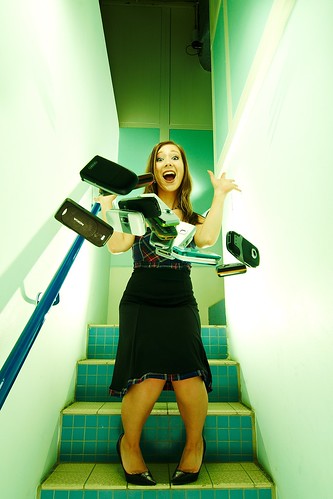
As an artist I know how weird it can be when you are forced to take pictures like this ;-)):
Marketers, Magicians and others have known this for a long long time - and make a pretty good living off it.
Psychologists are just starting to unravel these complex relationships and describing what happens inside the brain when we encounter such situations.
Just read any book like "How we decide" and you will understand what I'm getting at - or watch Richard Wiseman's videos on YouTube.
Now you might think - as I did for a long long time - how is that helping me understand chronic pain - or even better: how is it helping me in treating chronic pain?
The answer:
d) computation can take place anywhere
Let's repeat:
a) Brains are lazy
b) Brains take all the help they can get
c) the Brain doesn't care about the bodies boundaries
If a+b+c are true - then d also has to be true. ;-))
The Brain doesn't care where the solution to a given problem comes from - as long as it's there eventually.
Just look at phantom limb pain:
using a Mirror Box a lot of people can achieve a significant reduction of pain within a few minutes.
The Brain has a problem - it tries comparing different sources of input and output which don't fit together (it has an unsolvable computational or information processing problem); by using a mirror "you" transfer this problem to the environment.
By doing this you are "reframing" the problem - making it easier for the brain to do it's work.
So part of the overall computing process now happens outside of the body and out of the brain.
The mirror image of the moving hand is like a computer moving ones and zeroes around.
It's all just information - which in itself is completely meaningless without context.
I could go on about this for a week or so ;-) - and maybe I will at a later date - but for now I want to leave you with this:
the treatment of chronic pain hinges on the fact that we - as therapists - have to find a way to make it easier for the brain to deal with the situation at hand.
By transferring the problem to the environment we reduce the complexity of the problem - make it easier to solve - and the Brain can stop creating pain.
Just look at how little help a toddler for example needs when learning to walk:
his or her gait pattern without help is often pretty unstable - but even the softest touch suffices to make it much more robust. All your one finger touching his hand does is provide him with input; the brain doesn't have to compute a problem in 4 dimensional space anymore (don't forget the importance of timing!) - but it can reduce the problem to a 2 or 3 dimensional one.
Let me rephrase: your finger is not providing physical support - but informational support only - telling the brain "Look - just treat this part of space as a constant - because it's as stable as the surface this body is walking on".
Get it yet?
Don't worry - I didn't either.
It takes a while to sink in. ;-)
This is the hard part about the science of embodied cognition - getting your head around the concept of you not actually being where you think you are.
The illusion of having this egocentric worldview is so strong and so pervasive that we just can't override it.
But if we look closely enough we can spot it out of the corner of our eyes. ;-)
Like Douglas Adams wrote in the Hitchhikers Guide: flying is easy - just throw yourself at the floor and try to miss. ;-)
In order to show you how this actually looks when applied to patients I will talk about sensory discrimination training in another post.
You did this because those pieces have a straight line on one side - making them relatively easy to pick out of the heap of a thousand or more pieces.
Now - as you start working on more difficult parts of the puzzle - you pick up each new piece and try to match the individual pattern and shape to other pieces that are already in place.
While you are doing this - you are automatically turning the piece you are holding around on it's different axes - trying to see if the piece will fit.
At this point allow yourself a break - lean back and start thinking. ;-)
What just happened?
I won't lie to you: I don't know.
But what I do know is that by examining this question we are one step further along in solving the problem of how to treat chronic pain.
That's a bold claim - but one I feel very confident about.
Here's why:
your brain is - as you will know - a great pattern recognition machine.
It's also pretty good at mental rotation and judging distances, etc. - just think about driving a car and trying to get through a tight alley; your brain creates a map of the space surrounding the car, factors in the dimensions of the car and "tells" you that you will fit through.
And as with everything else - some people are better at that stuff than others ;-) (think fighter pilots or Air Traffic Controllers).
So mentally rotating the piece you are holding in your hand should be pretty easy - right?
It is; but still most of us prefer to do it "in real space".
Why?
a) Brains are lazy
b) Brains take all the help they can get
c) the Brain doesn't care about the bodies boundaries
d) computation can take place anywhere
Let me explain:
a) Brains are lazy
Thinking uses up a lot of energy - tons of it.
And since brains evolved under circumstances where food was scarce saving energy makes sense.
Which brings us to:
b) Brains take all the help they can get
It makes sense to transfer the workload away from the brain.
Why not use a calculator instead of solving the problem in your head?
Why not write something down instead of remembering it?
It makes evolutionary sense to use "outside" help instead of having the brain do everything by itself. It's much more efficient that way.
You can of course debate these points as long as you like - they are by no means watertight ;-) - but what I'm trying to get to is this:
c) the Brain doesn't care about the bodies boundaries
"We" normally have the strong feeling to be inside our bodies.
Metzinger and others have shown that this feeling of "I" can be transferred to just about any place you want.
You can swap bodies with another person within a couple of minutes.
I myself had my hand "replaced" with one made of rubber which felt really weird - and that took just 20 seconds or so.
We also know that tools are quite easily and readily incorporated into the body schema - walking sticks, surgical tools and what not become parts of "us"; and if you want to speculate - sometimes even emotions and feelings come with that (just look at how some people feel and talk about their cars).
And here's why this is important:
the artificial boundary between "us" and the world simply doesn't exist.
We are part of the environment - and our surroundings are part of us.
We act on our environment - but also react to it.
And: most times we aren't even aware of how our environment "makes us do things".
As an artist I know how weird it can be when you are forced to take pictures like this ;-)):
Marketers, Magicians and others have known this for a long long time - and make a pretty good living off it.
Psychologists are just starting to unravel these complex relationships and describing what happens inside the brain when we encounter such situations.
Just read any book like "How we decide" and you will understand what I'm getting at - or watch Richard Wiseman's videos on YouTube.
Now you might think - as I did for a long long time - how is that helping me understand chronic pain - or even better: how is it helping me in treating chronic pain?
The answer:
d) computation can take place anywhere
Let's repeat:
a) Brains are lazy
b) Brains take all the help they can get
c) the Brain doesn't care about the bodies boundaries
If a+b+c are true - then d also has to be true. ;-))
The Brain doesn't care where the solution to a given problem comes from - as long as it's there eventually.
Just look at phantom limb pain:
using a Mirror Box a lot of people can achieve a significant reduction of pain within a few minutes.
The Brain has a problem - it tries comparing different sources of input and output which don't fit together (it has an unsolvable computational or information processing problem); by using a mirror "you" transfer this problem to the environment.
By doing this you are "reframing" the problem - making it easier for the brain to do it's work.
So part of the overall computing process now happens outside of the body and out of the brain.
The mirror image of the moving hand is like a computer moving ones and zeroes around.
It's all just information - which in itself is completely meaningless without context.
I could go on about this for a week or so ;-) - and maybe I will at a later date - but for now I want to leave you with this:
the treatment of chronic pain hinges on the fact that we - as therapists - have to find a way to make it easier for the brain to deal with the situation at hand.
By transferring the problem to the environment we reduce the complexity of the problem - make it easier to solve - and the Brain can stop creating pain.
Just look at how little help a toddler for example needs when learning to walk:
his or her gait pattern without help is often pretty unstable - but even the softest touch suffices to make it much more robust. All your one finger touching his hand does is provide him with input; the brain doesn't have to compute a problem in 4 dimensional space anymore (don't forget the importance of timing!) - but it can reduce the problem to a 2 or 3 dimensional one.
Let me rephrase: your finger is not providing physical support - but informational support only - telling the brain "Look - just treat this part of space as a constant - because it's as stable as the surface this body is walking on".
Get it yet?
Don't worry - I didn't either.
It takes a while to sink in. ;-)
This is the hard part about the science of embodied cognition - getting your head around the concept of you not actually being where you think you are.
The illusion of having this egocentric worldview is so strong and so pervasive that we just can't override it.
But if we look closely enough we can spot it out of the corner of our eyes. ;-)
Like Douglas Adams wrote in the Hitchhikers Guide: flying is easy - just throw yourself at the floor and try to miss. ;-)
In order to show you how this actually looks when applied to patients I will talk about sensory discrimination training in another post.
Subscribe to:
Posts (Atom)


